Sight reading often looks like magic.
You watch a pianist sit down, open a score they’ve never seen before, and play fluently—while the rest of us are still trying to figure out the key signature. It’s easy to assume that strong sight readers are just “naturally gifted.”
They’re not.
Strong sight reading is a trained skill, built over time through musicianship, pattern recognition, and strategic practice. The good news? That means it’s learnable.
Here’s what strong sight readers actually do differently—and how you can start training these skills yourself.
1. They Read Ahead (Not Just What’s Under Their Fingers)
One of the biggest differences between struggling and confident sight readers is where their eyes are.
Strong sight readers are not reacting note-by-note. They’re scanning ahead of the sound, giving their brain time to prepare what’s coming next. This allows for smoother playing, fewer hesitations, and better musical flow.
If your eyes are always glued to the exact note you’re playing right now, your fingers are constantly playing catch-up.
How to train this:
- Practice reading one beat (or one measure) ahead
- Slow the tempo enough that your eyes can stay forward
- Resist the urge to stop when mistakes happen—keep moving
Sight reading improves when you prioritize continuity over perfection.
2. They See Intervals and Shapes, Not Individual Notes
Strong sight readers don’t read music as a string of isolated notes. They see intervals, contours, and shapes.
Instead of thinking:
“C… E… G…”
They think:
“A broken triad moving upward.”
This kind of visual grouping dramatically reduces cognitive load and allows the brain to process music faster.
How to train this:
- Practice naming intervals instead of note names
- Notice melodic direction (up, down, repeated notes)
- Look for familiar patterns like scales, arpeggios, and chord shapes
This skill alone can transform how readable music feels.
3. They Read Vertically and Understand Harmony
Sight reading isn’t just horizontal—it’s vertical.
Strong readers recognize chords, progressions, and harmonic function instantly. When they see stacked notes, they’re not decoding each pitch—they’re identifying the harmony.
This is where music theory directly supports sight reading.
When you understand harmony, surprises disappear.
How to train this:
- Analyze chord progressions away from the instrument
- Practice identifying chords at a glance
- Connect what you see to what you hear
The better you understand harmony, the calmer sight reading feels.
4. They’re Comfortable in Many Keys
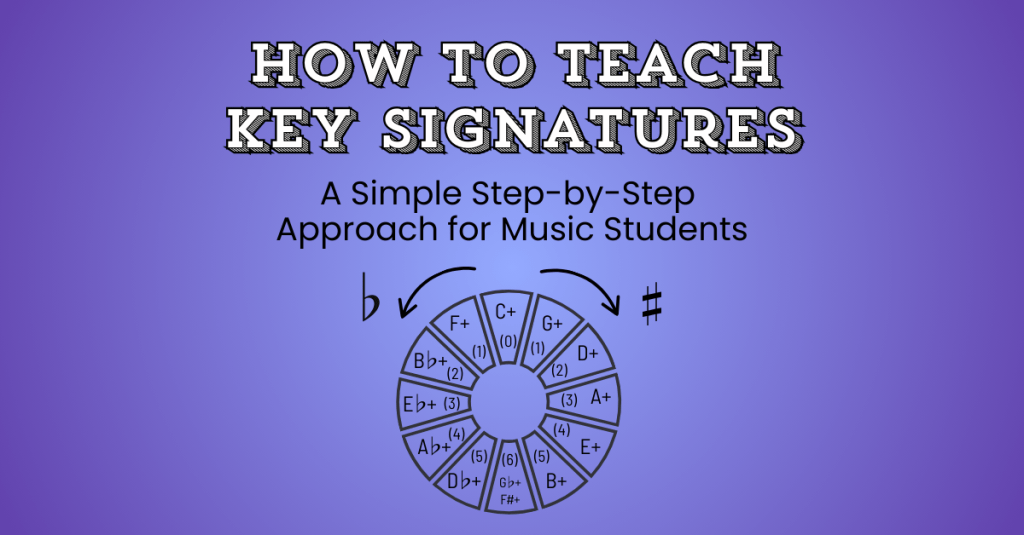
A lot of sight-reading anxiety comes from unfamiliar key signatures.
Strong sight readers aren’t unbothered by accidentals because they’ve spent time practicing in all keys, not just the “easy” ones. This creates fluency and reduces panic when something unexpected appears on the page.
How to train this:
- Practice scales, chords, and cadences in every key
- Rotate keys regularly instead of staying in your comfort zone
- Notice recurring patterns across keys
Key fluency makes sight reading predictable instead of stressful.
5. They’ve Built Musicianship Skills Outside the Repertoire
Sight reading doesn’t develop only by sight reading pieces.
It’s the result of:
- technique
- theory
- ear training
- pattern recognition
Strong sight readers have reinforced these skills separately, which makes putting them together feel natural.
How to train this:
- Strengthen technique so your fingers don’t limit your reading
- Build theory knowledge so harmony makes sense instantly
- Develop musicianship skills that connect sound, symbol, and movement
Sight reading is not one skill—it’s the intersection of many.
The Bottom Line
Strong sight readers aren’t faster because they’re more talented.
They’re faster because they:
- read ahead
- see patterns
- understand harmony
- feel comfortable in all keys
- trust their musicianship
And every one of those skills can be trained.
If sight reading feels intimidating right now, that doesn’t mean you’re behind. It just means some of the supporting skills need strengthening—and that’s something you can work on deliberately.
Sight reading isn’t magic.
It’s musicianship in action.
Want to Strengthen the Skills That Support Sight Reading?
Sight reading improves fastest when musicianship, theory, and technique work together. If you’re looking for structured resources to train these skills more intentionally, these materials pair naturally with the ideas in this post:
🎼 Musicianship Lesson 1–3 Bundle
Build the foundational skills that make sight reading feel predictable instead of stressful—pattern recognition, interval awareness, and listening skills that connect sound to notation.
👉 Explore the Musicianship Levels 1–3 Bundle
📚 The Ultimate Music Theory Unit 1 Bundle
Understanding key signatures, intervals, scales, and harmony helps musicians read vertically and anticipate what’s coming next on the page.
👉 View the Music Theory Unit 1 Bundle
🎹 Piano Technique Bundle
Fluency in scales, chords, and cadences across all keys reduces hesitation and allows the hands to respond more easily to what the eyes see.
👉 Browse the Piano Technique Bundle
Sight reading isn’t built in isolation — it’s the result of strong, connected musicianship over time.




Leave a comment