Teaching music theory to high school students can feel overwhelming — especially when classes include a mix of experienced musicians and complete beginners.
The good news is that music theory doesn’t have to feel complicated. With a clear sequence and practical approach, students can build confidence and develop real musical understanding.
In this guide, I’ll walk through a step-by-step approach to teaching music theory in a way that keeps students engaged while building strong foundational skills.
If you’re looking for structured lessons, you can start with my FREE introductory resource here:
👉 Music Theory Lesson 1: Musical Alphabet, Keyboard & Clefs
Start With Foundations: Musical Alphabet, Staff, Clefs, and Keyboard
Strong foundations make everything else easier.
Begin by teaching:
- Musical alphabet
- Lines and spaces on the staff
- Treble and bass clef
- Keyboard layout
Using the keyboard helps students visualize pitch relationships and hear patterns clearly.
👉 Music Theory Lesson 1 Bundle: Musical Alphabet, Keyboard & Clefs
Teach Rhythm Through Active Learning
Rhythm should be experienced, not just written.
Focus on:
- Note values
- Counting systems
- Clapping exercises
- Speaking rhythms
👉 Music Theory Lesson 2 Bundle: Middle C, Ledger Lines & the Grand Staff
Introduce Accidentals, Semitones, and Whole Tones
Help students understand how pitch works by exploring patterns on the keyboard.
Teach:
- Sharps and flats
- Half steps and whole steps
- Enharmonic thinking
👉 Music Theory Lesson 3 Bundle: Accidentals, Tone & Enharmonic Equivalents
Explore Time Signatures in Simple Meter (2/4, 3/4, 4/4)
Once rhythm basics are secure, students can explore meter.
Discuss:
- Beat groupings
- Strong vs weak beats
- How meter shapes music
👉 Music Theory Lesson 4 Bundle: Notes, Rests & Time Signatures (2/4, 3/4, 4/4)
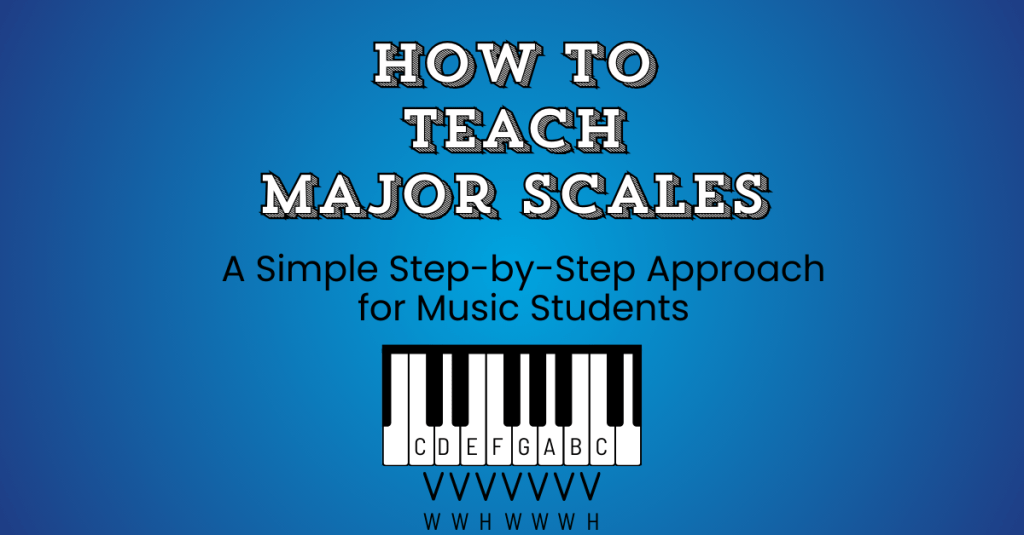
Build Major Scales Step by Step
Major scales help students connect patterns across music.
Students learn:
- Whole and half step pattern
- Scale construction
- Tonal center awareness
👉 Music Theory Lesson 5 Bundle: The Major Scale
If you’d like a practical way to reinforce major scale patterns with your students, here’s a walkthrough that demonstrates how scales feel and sound at the keyboard — a great way to connect theory with real music-making.
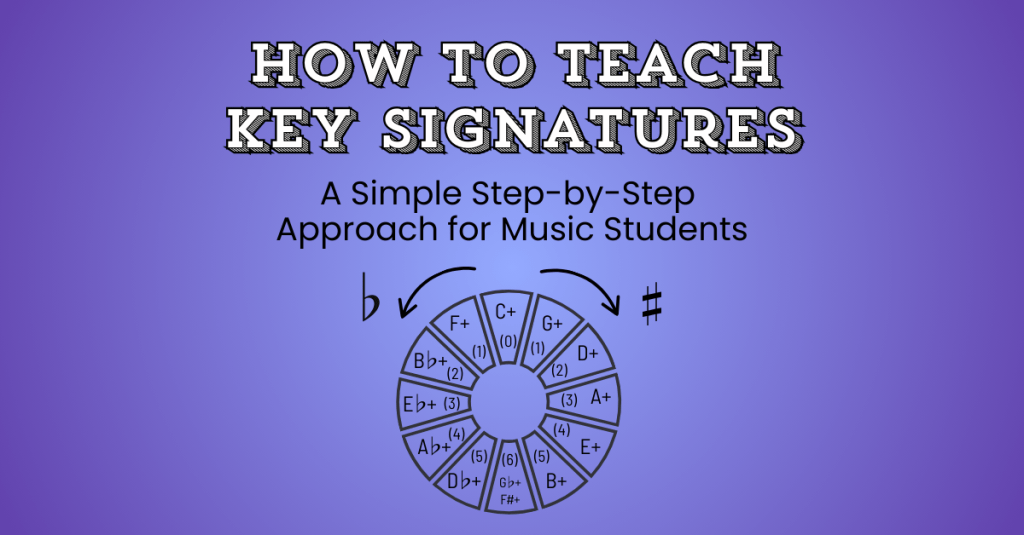
Teach Key Signatures for Musical Fluency
Key signatures help students read music more efficiently.
Focus on:
- Recognizing keys
- Connecting scales and signatures
- Pattern recognition
👉 Coming Soon
Introduce Minor Scales
Minor scales deepen musical understanding and expressive awareness.
Teach:
- Natural minor
- Harmonic minor
- Melodic minor
- Major/minor relationships
👉 Coming Soon
Teach Compound Meter (6/8 Time)
Introduce compound meter after students are comfortable with simple time.
Focus on:
- Two big beats
- Flow of compound rhythm
- Listening examples
👉 Coming Soon
Study Intervals to Strengthen Musicianship
Intervals help students understand melody and harmony.
Students practice:
- Identifying intervals
- Hearing relationships
- Applying interval knowledge
👉 Coming Soon
Why Teaching Music Theory in Sequence Matters
Teaching theory step by step reduces overwhelm and helps students build confidence.
Students begin to:
- Recognize patterns
- Hear connections
- Learn music more quickly
- Engage more deeply
Sequencing turns theory into a meaningful process rather than a collection of rules.
Tips for Keeping Students Engaged in Music Theory
To keep lessons dynamic:
- Connect theory to repertoire
- Use singing and keyboard exploration
- Incorporate listening
- Encourage creativity
- Spiral review concepts
Small, consistent reinforcement builds lasting understanding.
Final Thoughts: Music Theory Can Feel Accessible
When taught gradually, music theory becomes approachable and empowering for students.
With clear sequencing and practical application, students develop the skills they need to understand and enjoy music more deeply.
Explore My Full Music Theory Lesson Sequence
If you’d like ready-to-use lessons that follow this exact progression, you can explore my full set of classroom resources here:
These lessons are designed specifically for middle and high school music teachers who want structured, engaging theory instruction without the overwhelm.




Leave a comment