Music history classes often focus heavily on well-known male composers such as Mozart, Bach, and Beethoven. While these composers are undeniably important, students also benefit from learning about the many influential female composers who shaped music history. Including female composers in your curriculum helps students see a broader picture of the musical world and introduces them to incredible music that is often overlooked.
In my own music classes, composer listening activities are one of the easiest ways to introduce students to new music and spark discussion about different historical periods. Even a short listening activity can help students connect with music in a meaningful way.
In this post, we’ll explore three important female composers to introduce in music class and share ideas for teaching their music through listening, discussion, and analysis.
Why Teach Female Composers?
For centuries, women faced significant barriers to pursuing professional careers in music. Many female composers were discouraged from publishing their works or performing publicly, even when they were highly talented.
By teaching female composers, we can:
- Broaden students’ understanding of music history
- Highlight composers whose work deserves more recognition
- Encourage students to see themselves reflected in the musical world
- Introduce students to a wider range of musical styles and perspectives
Adding even a few female composers to a music listening unit or composer of the month program can make a meaningful impact.
Hildegard von Bingen
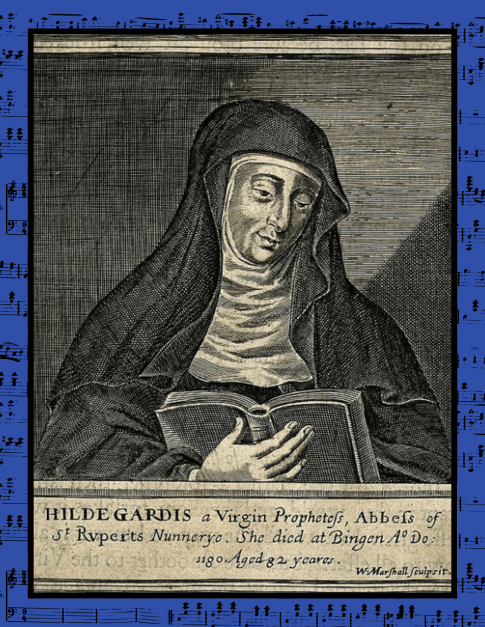
Hildegard von Bingen (1098–1179) was a German abbess, writer, mystic, and composer. She is one of the earliest known composers in Western music history whose works have survived.
Her music belongs to the tradition of Gregorian chant, but her compositions are often more expressive and wide-ranging than typical chants of the time.
Her most famous work is the sacred drama Ordo Virtutum, which is considered one of the earliest morality plays set to music.
Teaching Ideas
When introducing Hildegard in music class, students can explore:
- Medieval music and chant
- The role of music in religious life
- How melodies function without harmony or accompaniment
Listening activities might include:
- Identifying the melodic contour of a chant
- Describing the mood and atmosphere of medieval sacred music
- Comparing Hildegard’s chant to later musical styles
Because her music is so different from modern music, students often find it fascinating.
Clara Schumann
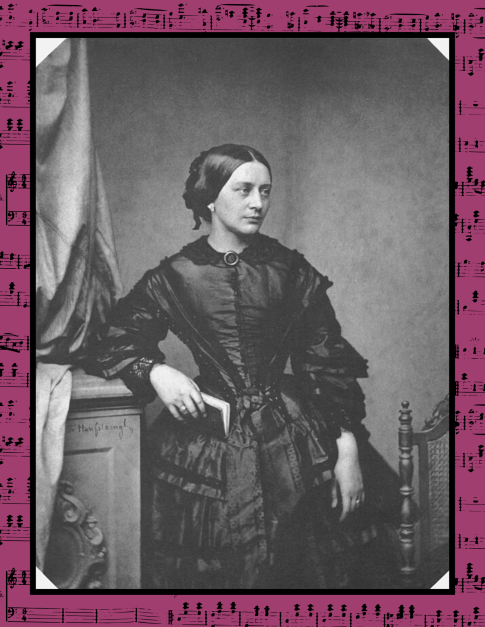
Clara Schumann (1819–1896) was one of the most celebrated pianists of the Romantic era and an accomplished composer.
She performed across Europe, premiered works by many composers, and played a major role in promoting the music of her husband, Robert Schumann, and her close friend Johannes Brahms.
Although she composed less frequently later in life, her early works demonstrate remarkable creativity and musical sophistication.
Teaching Ideas
Clara Schumann is an excellent composer to introduce during a Romantic era unit.
Students can explore:
- Romantic musical expression
- Piano music and virtuosic performance
- The role of performers in shaping music history
Listening activities might include:
- Identifying expressive elements such as rubato, dynamics, and lyrical melodies
- Comparing Clara Schumann’s piano music with works by Robert Schumann or Chopin
- Discussing how performers interpret Romantic music
Her music is also very accessible for students who already play piano.
Fanny Mendelssohn
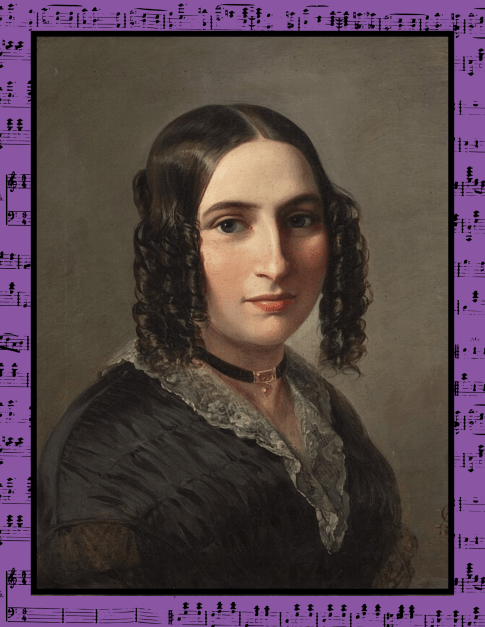
Fanny Mendelssohn (1805–1847) was a gifted composer and pianist from a highly musical family. She was the sister of Felix Mendelssohn, and the two shared a close musical relationship.
Despite her talent, social expectations at the time discouraged women from pursuing professional composing careers. Some of her early compositions were even published under her brother’s name.
Today, Fanny Mendelssohn is increasingly recognized for her beautiful songs and piano works.
Teaching Ideas
Students can explore:
- Song writing and Lieder
- Musical storytelling in Romantic music
- The historical challenges women faced in professional music careers
Listening activities might include:
- Analyzing the relationship between melody and harmony
- Comparing her music to Felix Mendelssohn’s style
- Identifying Romantic musical characteristics
Her music offers excellent opportunities for listening analysis and discussion.
Using Composer Studies in the Music Classroom
Composer studies are a powerful way to help students connect with music history.
In many classrooms, teachers use activities such as:
- Listening journals
- Composer of the month projects
- Short research tasks
- Listening analysis worksheets
- Music history discussions
These types of activities help students develop stronger listening skills and historical understanding of music.
Female Composer Resources for Music Teachers
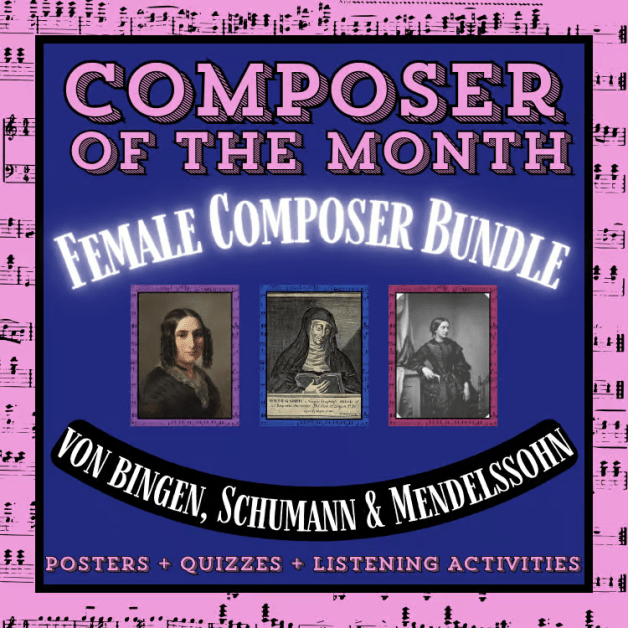
If you’re looking for ready-to-use materials, I’ve created a Female Composer Bundle that includes activities for:
- Hildegard von Bingen
- Clara Schumann
- Fanny Mendelssohn
These resources include posters, composer biographies, listening activities, and quizzes designed to help students engage with each composer’s music.
You can explore the bundle here:
→ Female Composer of the Month Bundle
More Composer Resources for Music Class
If you enjoy teaching composer units, you may also find these resources helpful. I’ve created a variety of composer materials that work well for music listening units and composer of the month programs.
You can explore my full collection here:
→ Complete Composer Resource Collection
These materials can easily be combined to create a full-year music listening program that introduces students to composers from different periods of music history.
Bringing Female Composers Into Your Music Curriculum
Teaching female composers is an excellent way to enrich music history lessons and broaden students’ musical perspectives.
By exploring composers such as Hildegard von Bingen, Clara Schumann, and Fanny Mendelssohn, students gain a deeper understanding of how diverse voices have shaped the history of music.
Whether you incorporate a full composer study, a listening activity, or a short music history lesson, introducing female composers helps create a more complete and engaging music curriculum.
If you’d like ready-to-use lessons and listening activities for these composers, you can find them in my Female Composer of the Month Bundle, along with other composer resources designed for music teachers.





Leave a comment