
Managing logistics and preparing your singers for a successful performance takes time, organization, and a clear vision. The good news? With the right approach, your next concert can be both stress-free and deeply rewarding—for you, your students, and your audience.
This step-by-step guide walks you through everything you need to consider when planning a choir concert, from repertoire selection to rehearsal pacing, promotion, and performance night details.
Step 1: Start With the Big Picture
Before diving into details, pause and ask:
- What is the purpose of this concert? (Seasonal celebration? Assessment? Community event? Fundraiser?)
- Who is your audience? (Parents, teachers, general public?)
- Is there a theme or concept? Do you want a unifying thread or a showcase of diverse styles?
Having a clear vision from the start will guide every decision you make—and will save you hours of second-guessing later.
Step 2: Select Repertoire Wisely
Repertoire makes or breaks a concert. Consider:
- Skill Level: Choose pieces that challenge but don’t overwhelm your students.
- Balance: Mix tempos, styles, languages, and textures.
- Theme & Flow: Does your program feel cohesive? Does it tell a story?
- Timing: Most school concerts run best at 45–60 minutes.
Pro tip: Always keep a few “backup pieces” in your back pocket in case something doesn’t come together in time. My SAB Holiday Teaching Pack works well for this!
Need ideas for seasonal repertoire?
Check out my SAB Christmas Visualizers playlist on YouTube for polished, rehearsal-friendly versions of classic carols. I also have several rehearsal tracks available, including the beloved Hallelujah Chorus and Rutter favourites. These are also great for at-home student practice.
Step 3: Build a Rehearsal Plan
Once you’ve selected your repertoire, map out the weeks leading to the concert:
- Set realistic weekly goals.
- Schedule sectionals for challenging harmonies.
- Plan full run-throughs during the last 2–3 rehearsals.
- Build in time for reflection (“What needs tightening?” “Where are we strongest?”).
If you want structured rehearsal warm-ups and sight-singing routines, explore my Musicianship Lessons 1&2 Bundle, which includes exercises for intervals, dictation, Do–Sol patterns, and more.

Step 4: Manage Logistics Early
Concert stress often comes from logistics—so get ahead of the curve:
- Book your venue early.
- Communicate dates to families (send a save-the-date ASAP).
- Arrange any equipment needs (risers, microphones, piano tuning, lighting).
- Begin drafting your program early—including translations if needed.
This is also the perfect time to streamline communication.
📬 Need ready-made concert communication?
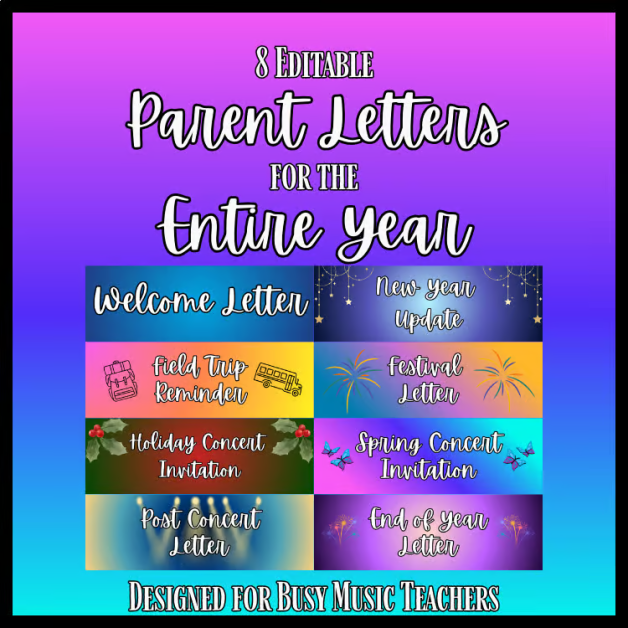
My Year of Parent Letters for Choir & Music Teachers includes editable templates for concert invites, reminders, permission slips, and thank-you messages—making the admin side so much easier.
Step 5: Market Your Concert
Even a beautifully prepared performance needs an audience.
- Create posters or digital graphics (students LOVE helping with this).
- Promote through school newsletters, social media, and community boards.
- Encourage students to personally invite family and friends.
If you want polished, Canva-friendly classroom posters and music graphics, check out my Elements of Music Posters and Composer of the Month Sets for quick, aesthetic ways to boost your music room branding year-round.


Step 6: Prepare Your Choir Beyond the Notes
Music is only part of the performance. Students also need:
- Stage Presence: Practice entrances, exits, posture, and bowing.
- Etiquette: Teach how to behave on stage between pieces.
- Confidence: Run informal “mini-performances” to reduce nerves.
For ongoing musicianship development throughout the semester, my Listening Journal Assignment and Musicianship Lessons work beautifully as pre-rehearsal warm-ups or reflection activities.

Step 7: Rehearse the Whole Experience
The final few rehearsals should feel like dress rehearsals:
- Run the program in order with minimal interruptions.
- Practice transitions, riser moves, and microphone hand-offs.
- Time the program.
- Do a full start-to-finish run, even if imperfect.
This builds stamina and helps students understand pacing and professionalism.
Step 8: Enjoy the Moment
On concert night, take a deep breath, trust the work you’ve done, and enjoy the music-making. Celebrate your students, the community you’ve built, and the growth you’ve witnessed all season long.
Free Resource: My Concert Planning Checklist
I’ve created a printable, step-by-step checklist that covers everything from repertoire planning to dress rehearsal week.
👉 Download your Concert Planning Checklist here.
👉 Grab it here!
It pairs perfectly with my Musicianship Lessons, Choir Parent Letters, and SAB Christmas Visualizers, all linked above.
More Resources for Choir Teachers
If you’re looking to build stronger routines, deepen musicianship, or simplify admin, here are some resources that support your program all year long:
- Musicianship Lessons Bundle (1&2) — sight-singing, intervals, + dictation
- Choral Warm-Up Posters + Warm-Up Assignment
- Composer of the Month Series (Mozart, Handel, Schubert, Bach, Liszt, Clara Schumann, Hildegard, and more)
- Music Listening Journal Assignment
- End-of-Year Music Activities Bundle — worksheets, print-and-go activities, reflection sheets
- Year of Parent Letters for Choir & Music Teachers
- SAB Christmas Visualizers Playlist — rehearsal tracks your students can actually learn from
Final Thoughts
Planning a choir concert can feel overwhelming—but when you break it into clear, manageable stages, it becomes both achievable and energizing. Involve your students, stay organized, and remember that the concert is ultimately a celebration of growth, artistry, and community.
Your Turn
What’s your favorite part of concert planning? Share your tips or must-have rituals in the comments below—I love hearing what other choir teachers are doing!







Leave a comment