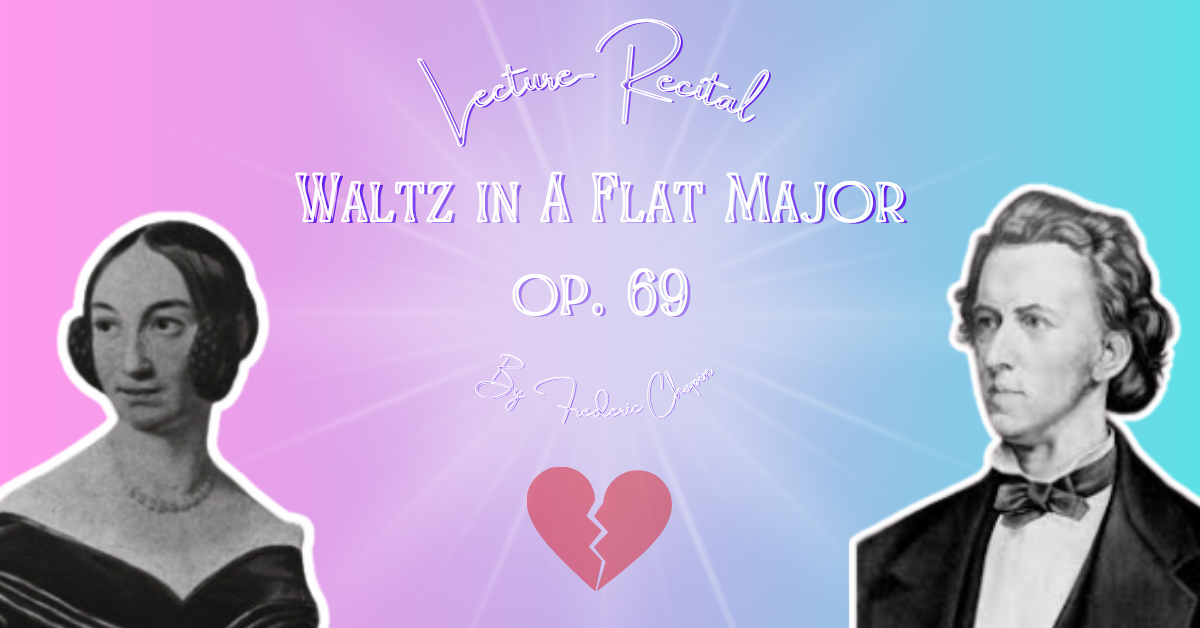
If you have ever felt the bittersweet pull of goodbye, then you have already touched the emotional world of Frédéric Chopin’s Farewell Waltz in A-flat major, Op. 69, No. 1. Delicate, elegant, and quietly aching, this beloved piece captures tenderness and longing in a way that still resonates deeply with listeners today.
In my newest lecture recital video, I explore not only the beauty of this iconic waltz, but also the story behind it and the musical details that make it so expressive. This is a piece that invites both performer and listener into a deeply personal emotional space, where grace and sorrow exist side by side.
A Waltz Shaped by Parting
Often known as the Farewell Waltz, this piece is closely associated with Chopin’s relationship with Maria Wodzińska and the sense of separation that surrounded that period of his life. Although the waltz may sound light and graceful on the surface, there is something more tender underneath it.
Its lyrical melody, subtle shifts in harmony, and expressive character give the piece a nostalgic quality that feels both intimate and timeless. Rather than presenting a dramatic or stormy kind of grief, Chopin offers something more restrained: a quiet sadness wrapped in elegance.
That emotional balance is part of what makes this waltz so compelling. It feels poised and beautiful, yet never emotionally distant.
What Makes the Farewell Waltz So Expressive?
One of the most striking things about this piece is the way Chopin creates emotional depth through nuance. The beauty of the Farewell Waltz does not come from sheer virtuosity, but from sensitivity.
In the lecture recital, I explore several elements that shape the character of the piece, including:
- the historical and emotional context surrounding the waltz
- harmonic details that contribute to its nostalgic atmosphere
- the role of rubato in shaping the musical line
- voicing and phrasing choices that help bring out its expressive qualities
- why this piece continues to resonate with pianists and listeners today
For performers, this piece offers a wonderful opportunity to think carefully about tone, pacing, and emotional restraint. For listeners, it opens a window into Chopin’s gift for saying so much through subtle musical gestures.
Watch the Lecture Recital
Whether you are a pianist, a music student, or simply someone who loves expressive classical music, I hope this lecture recital helps you hear Chopin’s Farewell Waltz in a deeper way.
You can watch the full video here:
Watch “The Nostalgic Beauty of Chopin’s Farewell Waltz” on YouTube
A Final Thought
Part of what makes Chopin’s music so enduring is the way it captures emotions that are difficult to put into words. The Farewell Waltz is a beautiful example of that gift. It is gentle, wistful, and full of quiet humanity.
If you have played this piece before, or if you have your own thoughts about its emotional tone, I would love to hear them. Feel free to leave a comment on the video or connect with me on social media.
You Might Also Like to Read…
- Master Every Major & Minor Key: Piano Technique Videos + Printable PDF Set
- Why Some Musicians Are Better Sight Readers (And How to Train It)








Leave a Reply