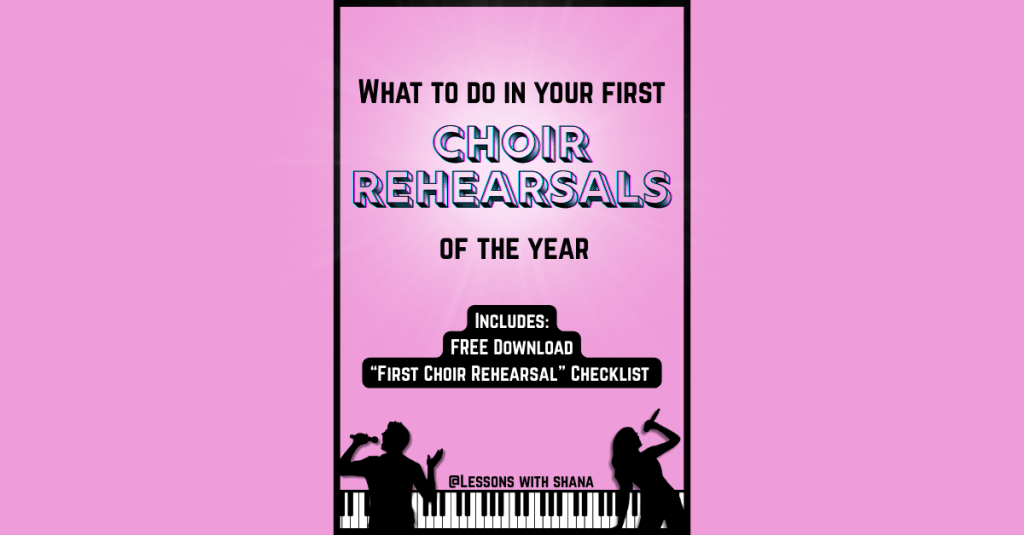
Your first choir rehearsals of the year are about much more than handing out music.
They’re your opportunity to establish classroom culture, build ensemble trust, and set expectations that will carry your choir through the rest of the year. Whether you’re teaching middle school, high school, or a mixed-level ensemble, those early rehearsals matter more than we sometimes realize.
Here’s how I set the tone from day one — including practical strategies, low-stress icebreakers, and musical choices that help choirs start the year feeling confident and connected.
Start with Clear Expectations
Before anyone sings a note, I take time to establish clarity around:
- rehearsal expectations (responsibility, participation, focus, kindness)
- basic procedures (entering the room, warming up, where to sit, where music lives)
- why choir matters — not just musically, but socially and emotionally
Students do better when they understand both the what and the why.
💡 Tip: I often involve students in creating a shared agreement or “choir contract.” When expectations are co-created, buy-in increases dramatically.
Use Low-Stress Icebreakers to Build Community
The first rehearsals can feel intimidating, especially for new singers. I rely on quick, low-pressure activities that focus on connection rather than performance.
Some favorites:
- Voice Part Mixer – students group by voice part, then find one non-musical fact they share
- Musical Name Game – each student says their name with a rhythm or pitch
- Choir Would You Rather – fun prompts like “Would you rather sing soprano or bass for a week?”
The goal isn’t perfection — it’s easing nerves and helping students feel seen.
Choose Repertoire That Builds Confidence Early
In the first few rehearsals, I prioritize music that:
- is accessible and quick to learn
- offers early wins (unison lines, echoes, simple harmony)
- allows students to experience success right away
Rounds, canons, and partner songs work especially well at this stage. They introduce blend, listening, and independence without overwhelming singers.
If you’re looking for a concrete example, I break down how I use solfege canons to build these skills — even in the first weeks of rehearsal — in this post → Choral Warm-Up: Solfege Canons for Sight Singing and Part Independence
Introduce Vocal & Ensemble Skills from Day One
Even in the very first rehearsals, warm-ups and repertoire can gently reinforce:
- ensemble skills (watching, breathing together, balance)
- diction and vowel shaping
- ear training (unison vs harmony, simple intervals)
This early groundwork makes more advanced music feel far less intimidating later on.
👉 If you’re interested in how I structure warm-ups across the week to support consistency (especially early in the year), I share that approach here:
How I Structure Weekly Vocal Warm-Ups (And Why Consistency Beats Intensity)
A Simple Tool to Stay Organized: First Rehearsal Checklist
The first rehearsals can feel like a lot to juggle — space setup, materials, routines, and your own mindset.
To help with that, I created a First Choir Rehearsal Checklist that walks you through:
- preparing your room
- organizing materials
- planning your rehearsal flow
- setting yourself up mentally for a strong start
🎁 Download the free First Choir Rehearsal Checklist here:
⸻
🗓 Coming Up: Planning Your First Concert
Tomorrow’s post wraps up Choir Week with a deep dive into concert planning — from repertoire to programs to performance tips. See you then!
See the next blog post here: From Rehearsal to Performance: Planning Your First Choir Concert






Leave a reply to Welcome to Choir Week! Free Printables, Planning Tips & Resources for Choral Teachers – Lessons With Shana Cancel reply